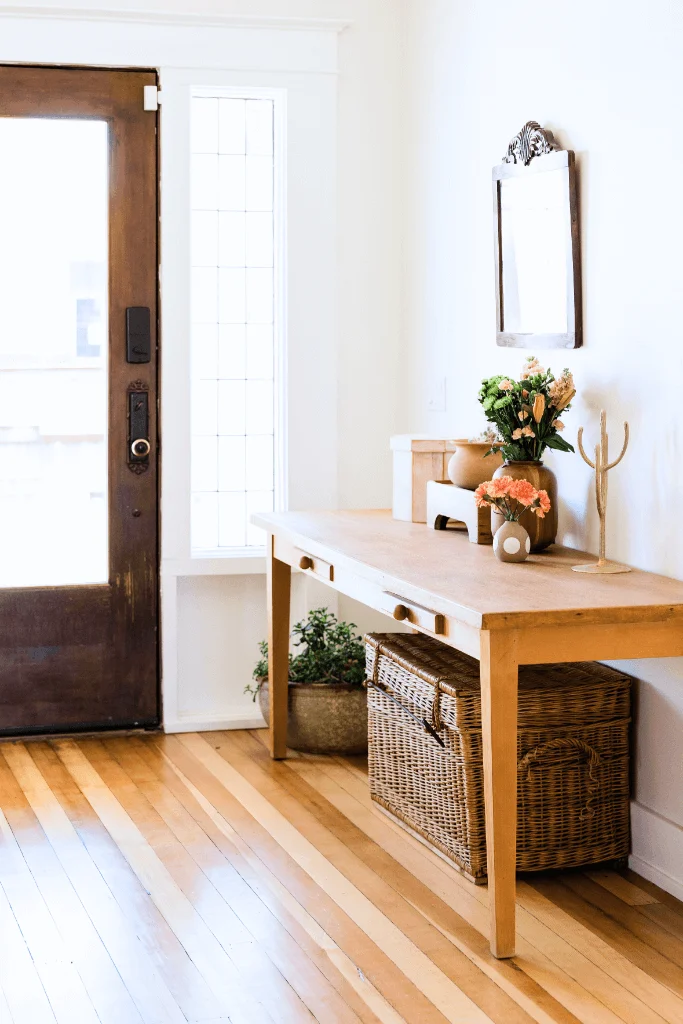
How to Make Your House Smell Good Naturally (All the Time)
This post tells you how to make your house smell good naturally so you can love coming home.

If you can relate to the experience of walking in the door after a long day and being hit with an unwelcoming smell, you’re in the right place. Maybe it’s not the worst smell ever. Maybe it’s hardly any smell. Or maybe it’s the smell of last night’s dinner. Or maybe, it’s a smell you can’t quite name but certainly wouldn’t choose. If you’re like me, you’ve tried candles. You’ve tried the plug-ins that make you sneeze. You’ve tried taking out the trash before it’s full. Nothing seems to make your home smell the way you want it to—warm, clean, like somewhere you actually want to be.
The problem likely isn’t your home. The problem is that most solutions to make your home smell good include synthetic fragrances that fade fast, smell artificial, and do nothing for the way your home actually feels.

How to make your house smell good naturally: The most effective way to make your house smell good naturally is to combine a stovetop simmer pot with a few simple daily habits: open windows for airflow, light beeswax candles for warmth, and use linen sprays for soft background scent. Natural fragrance layers better than synthetic alternatives and lasts longer because it works with your home’s air rather than masking it.
Why synthetic air fresheners make it worse
Most plug-ins and aerosol sprays don’t actually remove odors—they just cover them with a stronger chemical smell that your nose gets used to within hours. That’s why you keep buying more and it still never quite works.
Natural scent works differently. It dissipates slowly, changes slightly throughout the day, and leaves behind something that smells genuinely clean rather than fresh but fake. Once you switch, you’ll notice how obviously artificial your old products smelled.

1. Start with a stovetop simmer pot
A simmer pot is the single fastest way to change how your entire home smells, and it costs almost nothing. Fill a small saucepan with water, add a handful of ingredients, bring it to a gentle simmer, and leave it on low for a few hours. The steam carries the scent through every room.
I use a little saucepan like this exclusively for simmer pots now—it’s the right size, pours without dripping, and I don’t have to worry about it the way I would a nice cooking pot. I just put it on the burner and let the smells permeate my home.
The combinations that work best:
- For warmth: cinnamon sticks + orange slices + a few cloves + a splash of vanilla extract
- For clean and fresh: lemon slices + fresh rosemary + a few sprigs of thyme
- For calm: dried lavender + a sliced apple + a cinnamon stick
- For cozy fall: apple slices + star anise + cardamom pods + orange peel
The only rule: never let the water run dry. Check it every thirty minutes and add more water as needed. You can refrigerate the same mix and reuse it for two to three days before starting fresh. You can keep these small glass jars for exactly that—they’re airtight and they make it easy to pour your mix back into the pan when you want to use it again.

2. Swap your candles for beeswax
I remember shopping for paraffin candles—which is what most store candles are—back in the day, until I learned that they release synthetic fragrance and don’t make me feel good. Beeswax candles do the opposite: they actually purify air as they burn and I found that they don’t cause headaches.
Beeswax candles also have a naturally warm, honey-like scent on their own, without any added fragrance. Imagine a beeswax pillar candle burning in your living room just before sundown. That’s exactly the kind of atmosphere that makes a house feel warm, calm and cozy.
What to look for:
- 100% pure beeswax (not a blend—blends are usually mostly paraffin)
- Unscented or lightly scented with pure essential oils
- Cotton or wooden wick (avoid metal-core wicks)
This one is great because it burns for an unusually long time, the scent is subtle enough to layer with other things, and it looks beautiful on a shelf even when it’s not lit.
Beeswax candles cost more upfront but burn significantly longer than paraffin, so the cost per hour is actually comparable.
3. Make a linen spray for soft, background scent
A linen spray is one of the easiest DIY home products you can make, and it does something synthetic sprays can’t do—it absorbs into fabric and releases scent slowly throughout the day rather than disappearing in twenty minutes.
Basic recipe:
- 1 cup distilled water
- 2 tablespoons witch hazel or rubbing alcohol (helps the scent bind)
- 20–30 drops of pure essential oil
Pour into a spray bottle and mist lightly onto pillows, curtains, upholstered furniture, and fabric lampshades. Shake before each use.
The spray bottle actually matters more than you’d think. I went through a few cheap ones that either clogged, leaked, or had a spray pattern that soaked everything in one spot. This one has a fine mist, never clogs, and it looks nice enough to leave on your window sill instead of hiding it under your sink.
Scent combinations to try:
- Lavender + cedarwood for bedrooms (supports sleep)
- Lemon + eucalyptus for bathrooms and kitchens (clean and fresh)
- Bergamot + sweet orange for living rooms (warm and uplifting)
- Clary sage + vetiver for a grounding, earthy scent
For the essential oils themselves, quality varies wildly and it genuinely affects how the spray smells and how long it lasts. Research essential oils brands to find one with good ratings and reviews.
Avoid spraying directly onto silk, delicate fabrics, or light-colored wood.

4. Deal with the real source of bad smells first
No amount of natural fragrance will fix a home that has underlying odor problems. Before you layer scent, address the source.
The most common hidden odor culprits:
- The kitchen drain: Pour half a cup of baking soda followed by half a cup of white vinegar down the drain weekly. Let it fizz for ten minutes, then flush with hot water.
- The refrigerator: An open box of baking soda absorbs odors. Replace it every three months.
- Soft furnishings: Sofas, rugs, and curtains hold odor from cooking, pets, and daily life. Sprinkle baking soda on fabric surfaces, leave for thirty minutes, then vacuum thoroughly.
- The garbage can: Wash it monthly and place a few drops of tea tree oil on a cotton ball inside the lid.
- Pet beds and blankets: Wash weekly in hot water with a cup of white vinegar added to the rinse cycle.
One thing that can add unwanted odor to your kitchen are scraps sitting on the counter in a compost bin. This one has a charcoal filter inside the lid which helps eliminate smells.
Once the source is handled, your natural scent layering will actually work and last.
5. Bring in living plants that clean the air
Some houseplants actively filter airborne toxins and contribute to a cleaner-smelling home—not because they add fragrance, but because they purify the air and remove stale odors.
The most effective ones for air quality:
- Peace lily: Removes mold spores and filters several common VOCs. Does well in low light.
- Snake plant: One of the best air purifiers available, nearly impossible to kill.
- English ivy: Particularly good in bathrooms where mold is a concern.
- Eucalyptus: Hang a bundle in your shower—the steam activates the natural oils and fills the bathroom with a clean, spa-like scent. Replace monthly.
- Schefflera Amate: These look great in living rooms and purify air at the same time.
For snake plant specifically, this one comes ready to go. If you want, you could put it in a decorate plant pot and use it as a decor piece as well. It is a great plant if you have pets and requires very low maintenance.
For actual fragrance, a small potted gardenia, jasmine, or paperwhite narcissus on a windowsill will add a refreshing scent to an entire room naturally.

6. Build a simple daily scent routine
The homes that always smell good aren’t doing one big thing—they’re doing several small things consistently. A simple daily routine takes less than five minutes and makes the difference between a home that smells good occasionally and one that smells good all the time.
Morning: Open at least one window for fifteen minutes while you make coffee, even in cooler months. Fresh air exchange is the most underrated step. Light a beeswax or soy candle, or start a small simmer pot if you’re home.
After cooking: Boil a small pot of water with lemon slices and a sprig of rosemary for ten minutes. It neutralizes cooking odors faster than any spray.
Before bed: Mist your room and bedroom curtains lightly with your lavender linen spray. Run a diffuser with cedarwood or vetiver for thirty minutes before you sleep. This diffuser is the one I’ve had for three years and it still works great. It is quiet, runs for hours on a single fill, and the mist is fine enough that it doesn’t make the air feel damp.
Weekly: Wash fabric surfaces, vacuum upholstery, and clean your drains.

FAQ: Questions people ask about natural home fragrance
What is the best natural scent for a home?
The best natural scent for a home depends on the room. For living spaces, warm and woody scents like cedarwood, cinnamon, and vanilla create a welcoming atmosphere. For bedrooms, lavender and clary sage support relaxation and sleep. For kitchens and bathrooms, citrus and eucalyptus smell clean without being harsh. Layering two or three complementary scents—such as lemon and rosemary, or vanilla and cinnamon—creates a more complex, natural fragrance than any single note alone.
How do I make my house smell good without candles?
To make your house smell good without candles, use a stovetop simmer pot, a DIY linen spray, a reed diffuser with pure essential oils, or an ultrasonic diffuser. Opening windows daily for fresh air exchange is also one of the most effective and overlooked steps. Baking soda placed in small open dishes around the home absorbs odors without adding artificial scent.
Why does my house smell even after cleaning?
If your house still smells after cleaning, the odor is likely coming from soft furnishings, drains, or hidden mold rather than surfaces. Upholstered furniture, carpets, rugs, and curtains absorb and hold odor over time. Try sprinkling baking soda on fabric surfaces, leaving it for thirty minutes, and vacuuming. Check kitchen and bathroom drains, and inspect under sinks and in bathrooms for signs of mold or mildew.
How long does a simmer pot last?
A simmer pot lasts approximately two to four hours before water needs to be added. The ingredients themselves can be refrigerated and reused for two to three days before the scent weakens. Never leave a simmer pot unattended or let it boil dry.
Are essential oil diffusers safe for pets?
Some essential oils are toxic to cats and dogs even in diffused form. Oils to avoid around pets include tea tree, eucalyptus, peppermint, clove, and citrus oils. Lavender in small amounts is generally considered safer for dogs but should still be used with ventilation. If you have pets, research each oil specifically for your animal before diffusing, and always diffuse in a ventilated room your pet can leave freely.
Your home has a scent whether you choose it or not—the question is whether it’s what you like or not. These small, natural habits are low cost, take minutes a day, and do something a plug-in never can: they make your home smell natural and welcoming. Start with a simmer pot this week and notice what changes—then leave a comment and tell me which combination you tried.

This post tells you how to make your house smell good naturally all the time.
You make also like:
Indoor Plant Guide: 7 Tips to Care for Schefflera Amate
41 Thrift Store Decorating Ideas to Style Your Home On a Budget